Same inverter neighborhood (1800 W), similar energy, different futures. DELTA 3 is built to take extra batteries. AC180 is a heavier standalone pack with more watt-hours in the base box and a colder discharge rating on paper.
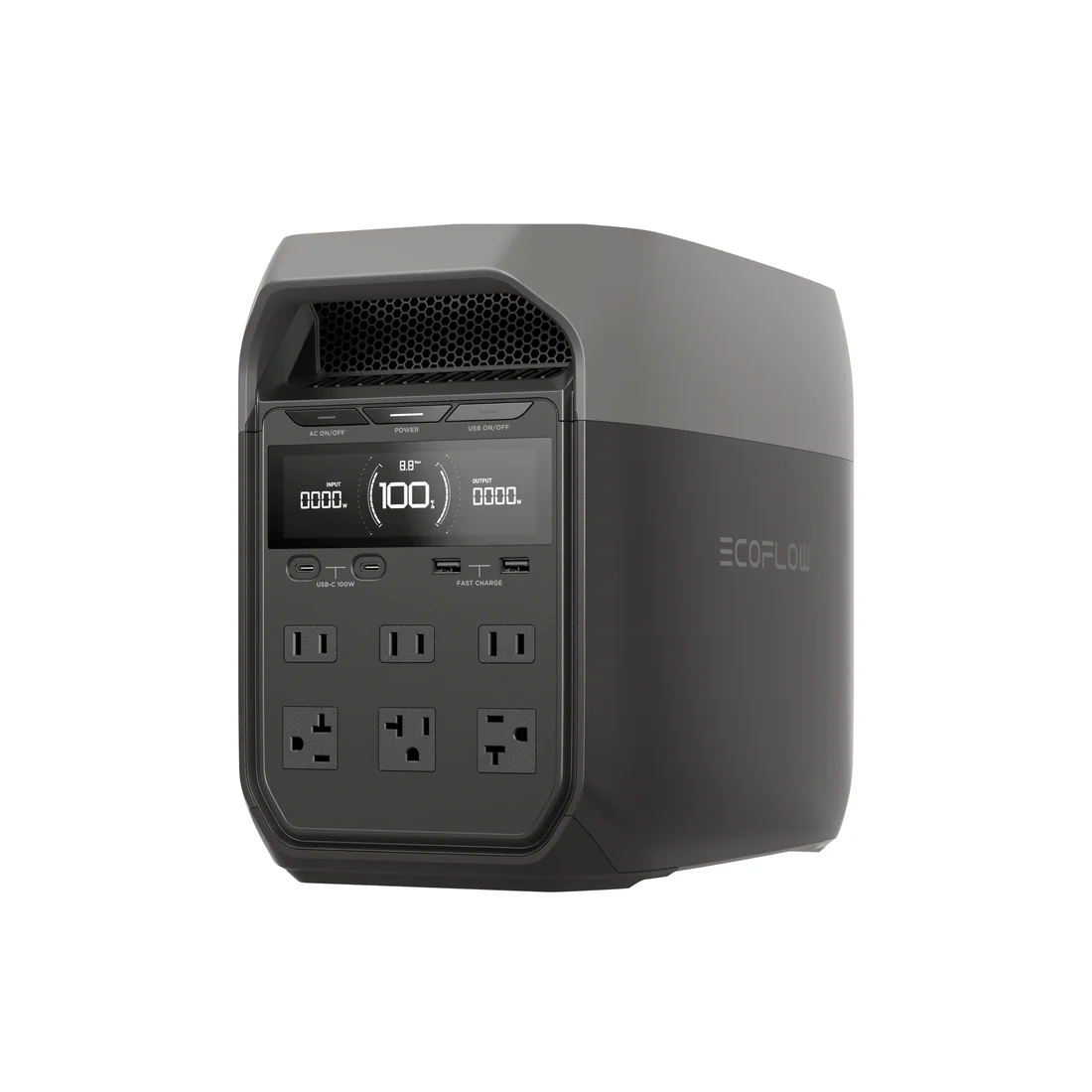
EcoFlow DELTA 3
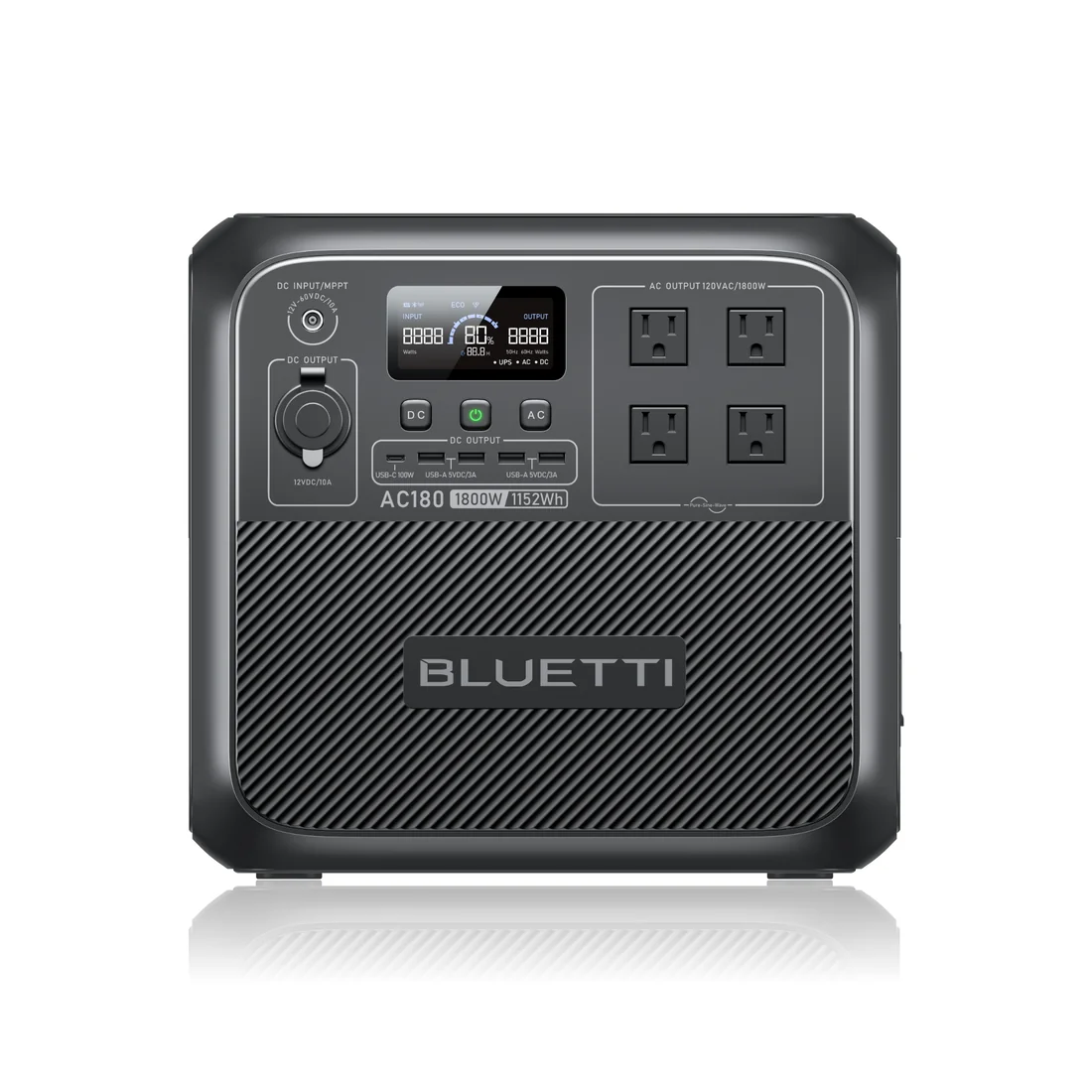
BLUETTI AC180
| Spec | EcoFlow DELTA 3 | BLUETTI AC180 |
|---|---|---|
| Capacity | 1024 Wh | 1,152 Wh (AC180); AC180P is 1,440 Wh — different SKUHigher |
| AC output | 1800 W rated AC, surge 3600 W; X-Boost up to 2200 W (US store) | 1,800 W AC; Power Lifting Mode 2,700 W (resistive loads, per BLUETTI) |
| Weight | Approx. 12.5 kg (27.6 lb)Lighter | About 16 kg / 35.27 lb in spec tables; some marketing still says 37 lb / 17 kg — we cite the spec-table 16 kg figure and flag the conflict |
| Chemistry | LFP (LiFePO4) | LiFePO4 |
| Cycle life (mfr.) | 4000 cycles to 80%+ capacity | 3,500+ cycles to 80% |
| Max solar input | 11–60 V, 500 W max (XT60) | 500 W max, VOC 12–60 VDC, 10 A |
| Expandable | Yes, up to 5 kWh with listed extra batteriesExpandable | No (AC180 is a standalone pack) |
| Charge temp. | See manual (not fully tabulated on US PDP we fetched) | 32–104°F / 0–40°C |
| Discharge temp. | See manual | −4–104°F / −20–40°C (1500 W max at 86–104°F) |
| Warranty (mfr. copy) | 5 years (US store) | 5 years (UK/US marketing) |
Capacity vs modularity
AC180 starts at 1152 Wh. DELTA 3 starts at 1024 Wh. That 128 Wh is real and small. The EcoFlow extra-battery story is the larger difference: EcoFlow lists compatibility with several extra batteries up to 5 kWh. BLUETTI does not sell the AC180 as an expandable hub. If you think you will want a second night of fridge later, that is the fork — not the 128 Wh.
Inverter footnotes
Both quote 1800 W. BLUETTI’s Power Lifting Mode is explicitly for high-power heating devices (kettles, dryers) up to 2700 W — not a general “run any 2700 W motor” claim. EcoFlow’s X-Boost is listed at 2200 W on the US DELTA 3 page (and 2400 W on some series comparison blogs). Read the mode names as manufacturer features with limits.
Cold
AC180 lists discharge to −20°C (with a 1500 W cap in the upper band). DELTA 3’s US PDP we fetched did not tabulate charge/discharge temperatures; the user manual is the place to look before an ice-fishing weekend. Charge temperature for AC180 is 0–40°C — still no AC charging below freezing.
Sources
EcoFlow US DELTA 3 PDP + user manual (EF-DL-H10-3). BLUETTI US/UK AC180 spec tables. Checked 9 September 2026.