Two dual-voltage boxes that can feed a transfer switch and run 240 V loads on their own. Anker costs less and charges faster from small solar arrays and a 240 V generator. Jackery stores about 31% more, outputs more at 240 V and takes rooftop-voltage solar.
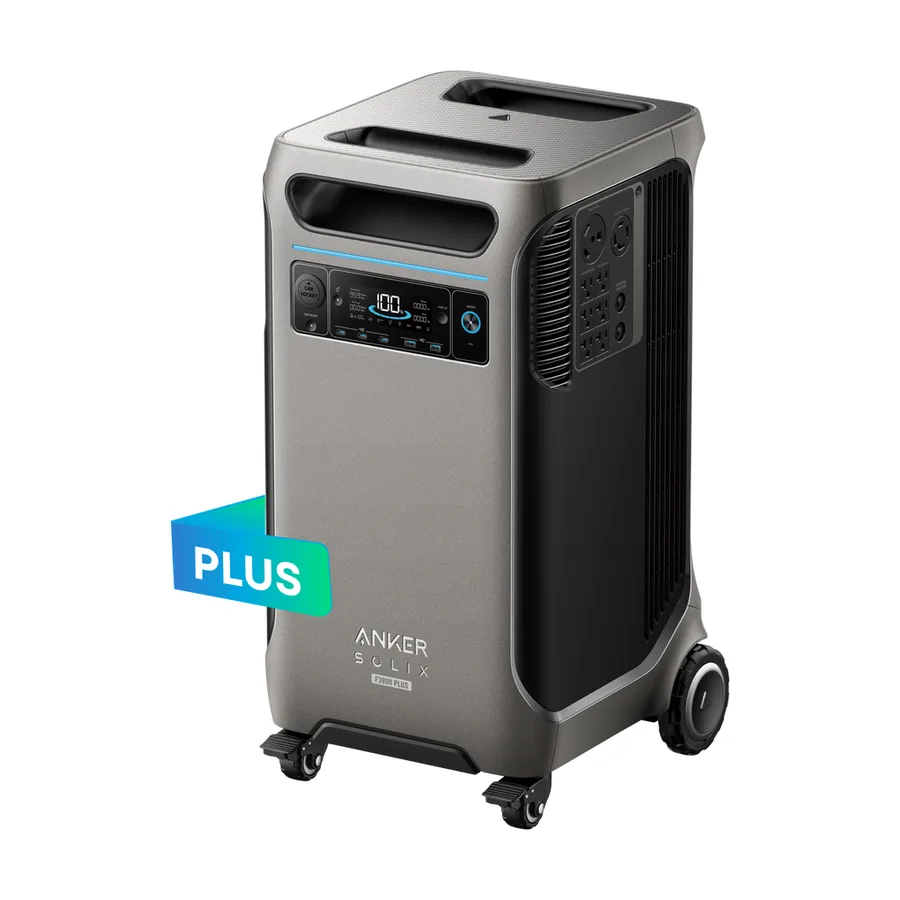
Anker SOLIX F3800 Plus
- Capacity3840 Wh
- AC output6000 W
- Weight136.7 lb
- Cycles3,000
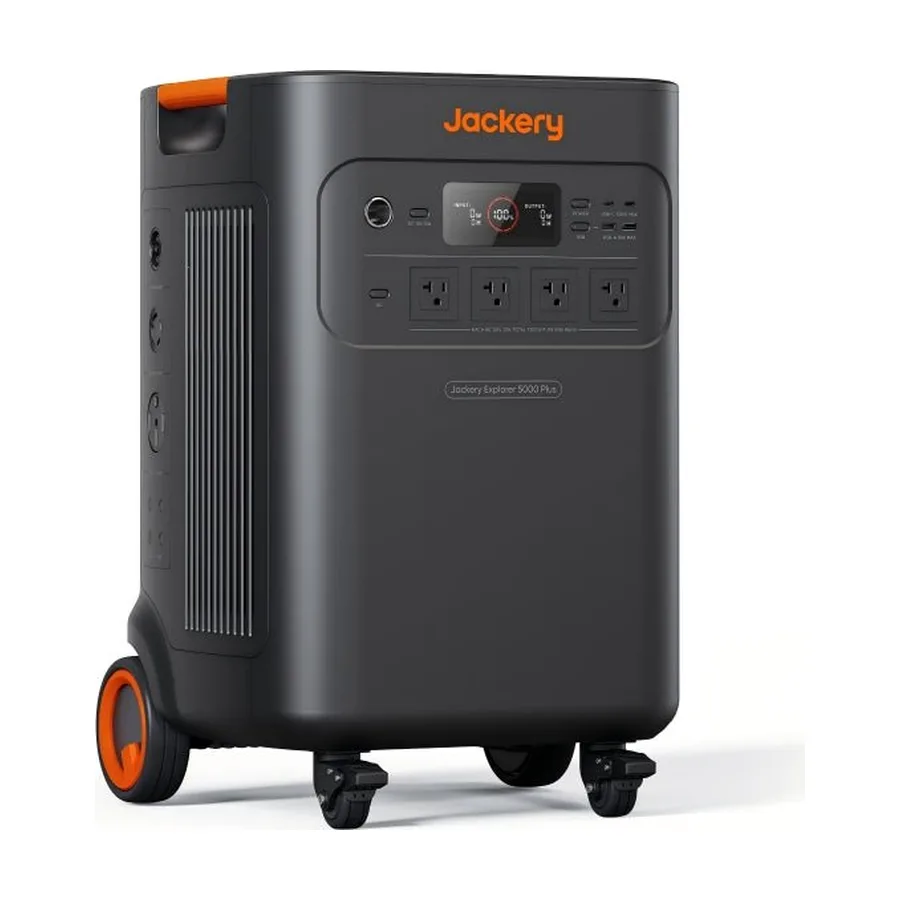
Jackery Explorer 5000 Plus
- Capacity5040 Wh
- AC output7200 W
- Weight134.5 lb
- Cycles4,000
Main differences
Full manufacturer wording
| Spec | Anker SOLIX F3800 Plus | Jackery Explorer 5000 Plus |
|---|---|---|
| Capacity | 3,840 Wh | 5,040 Wh |
| AC output | 6,000 W total AC (120/240 V); 6× 20 A (2,400 W per group of 3), 1× TT-30 (3,000 W), 1× L14-30 (6,000 W at 240 V) | 7,200 W at 240 V (L14-30R and 14-50R); 4× 20 A at 120 V (2,400 W each, 3,600 W per pair) |
| Weight | About 136.7 lb (62 kg) | About 134.5 lb (61 kg) |
| Chemistry | LFP (LiFePO4) | LiFePO4 |
| Cycle life (mfr.) | 3,000+ cycles | 4,000 cycles to 70%+ |
| Max solar input | 3,200 W max (2 inputs, 11–165 V, 17 A, 1,600 W each) | 4,000 W high-voltage (135–450 V, 15 A) + 1,200 W low-voltage (2 inputs, 16–60 V) |
| Expandable | Yes — up to 6× BP3800 Expansion Battery (3,840 Wh each, about 26.9 kWh per unit; 53.8 kWh with 2 units) | Yes — up to 5× Battery Pack 5000 Plus (5,040 Wh each, about 30.2 kWh per unit; 60.5 kWh with 2 units) |
| Charge temp. | 32–104°F (0–40°C) | 32–113°F (0–45°C) |
| Discharge temp. | −4–104°F (−20–40°C) | 5–113°F (−15–45°C) |
| Warranty (mfr. copy) | 5 years | 5 years |
Capacity and price
Explorer 5000 Plus stores 5040 Wh, about 31% more than the 3840 Wh in F3800 Plus. On the brand stores on our check date, F3800 Plus listed at $2,399.99 for the unit alone, shown sold out, and Explorer 5000 Plus at $3,499. That is roughly 62¢ versus 69¢ per Wh. Prices move often, so check both before you buy.
Output
F3800 Plus rates 6000 W in total at 120/240 V: six 20 A outlets in two groups of three (2400 W per group), a TT-30 RV outlet (3000 W) and an L14-30 outlet that supplies 240 V up to 6000 W. Explorer 5000 Plus rates 7200 W at 240 V through an L14-30R and a 14-50R, plus four 20 A outlets at 2400 W each (3600 W per pair). Both add two 100 W USB-C ports and a 12 V car outlet. Jackery lists an online UPS mode at 0 ms; Anker lists 20 ms.
Charging and solar
From a 120 V 15 A outlet, F3800 Plus takes 1800 W and Explorer 5000 Plus takes 1750 W (about 3.5 h to full). Anker also takes up to 6000 W from a 240 V generator or its Home Power Panel. Solar works differently: Anker accepts 3200 W across two 11–165 V inputs, which suits portable panels. Jackery accepts 4000 W on one 135–450 V input (about 1.7 h to full) for rooftop-style strings, plus 1200 W on two 16–60 V inputs.
Expansion, weight and warranty
F3800 Plus takes up to six BP3800 batteries (3840 Wh each) for about 26.9 kWh, or 53.8 kWh with two units. Explorer 5000 Plus takes up to five Battery Pack 5000 Plus (5040 Wh each) for about 30.2 kWh, or 60.5 kWh with two units. F3800 Plus: about 136.7 lb (62 kg), 27.6 × 15.3 × 15.6 in with wheels. Explorer 5000 Plus: about 134.5 lb (61 kg), 16.5 × 15.5 × 25 in. Anker discharges down to −4°F and charges from 32°F to 104°F; Jackery discharges down to 5°F and charges from 32°F to 113°F. Cycle claims: Anker 3000+; Jackery 4000 to 70%+. Both list 5 years of warranty.
Anker SOLIX F3800 Plus — official storeAmazon search
Jackery Explorer 5000 Plus — official storeAmazon search
Sources
Anker SOLIX US F3800 Plus product page tech specs and F3800 Plus user guide (A1790P). Jackery US Explorer 5000 Plus product page and Jackery Support FAQ “Explorer 5000 Plus Basic Information”. Checked 13 November 2026.