A Powerwall is a wall. A Jackery is a suitcase. Retail pages blur them with the phrase “home backup.” The electrical work, the permits, and the kilowatt-hours are not in the same sport.
Tesla Powerwall 3
- Capacity13.5 Wh
- AC output— W
- Weight286.6 lb
- Cycles10
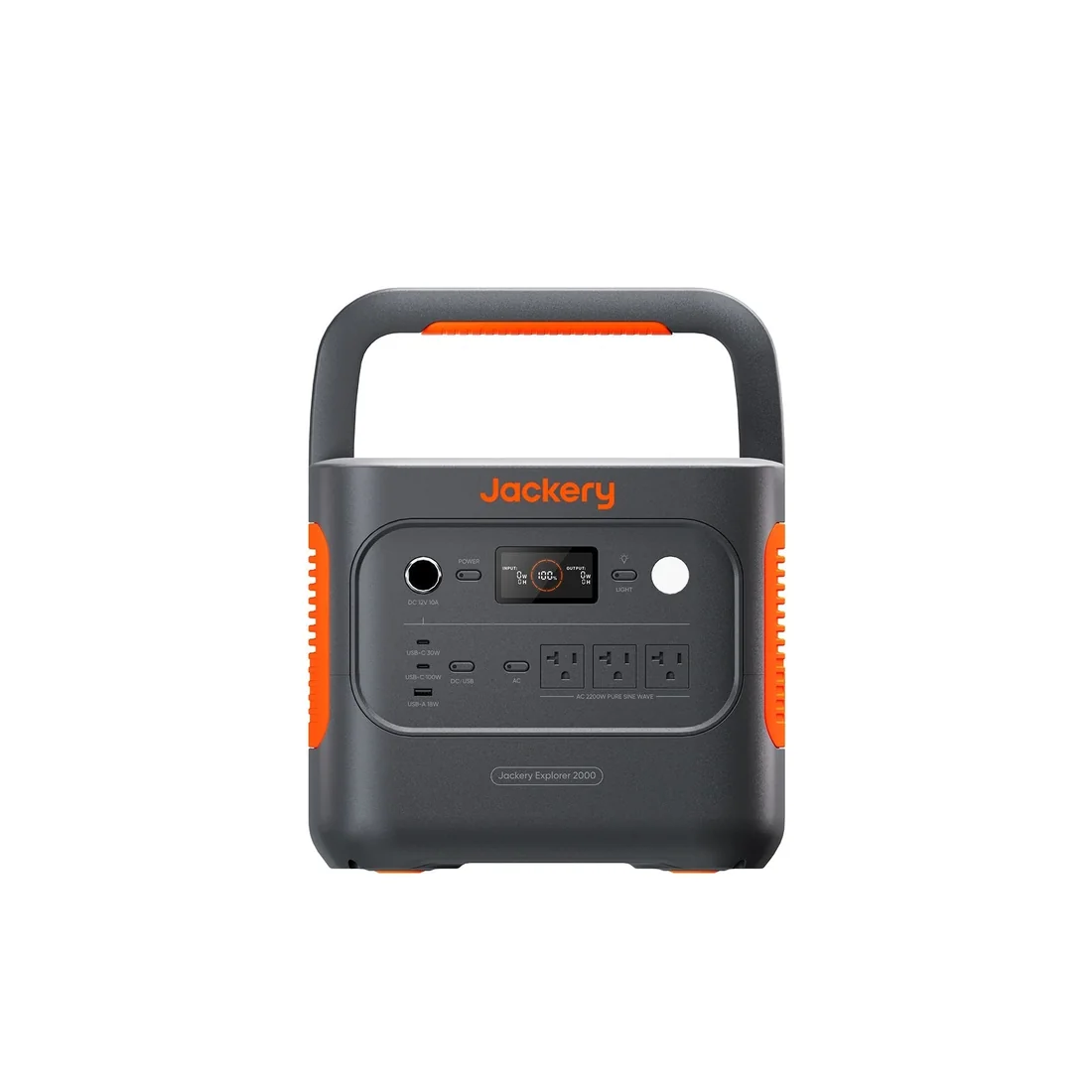
Jackery Explorer 2000 v2
- Capacity2042 Wh
- AC output2200 W
- Weight39.5 lb
- Cycles4000
Main differences
Full manufacturer wording
| Spec | Tesla Powerwall 3 | Jackery Explorer 2000 v2 |
|---|---|---|
| Capacity | 13.5 kWh nominal (Tesla datasheet) | 2042 Wh |
| AC output | Regional AC output — UK datasheet lists configurable 3.68–11.04 kW; NA figures differ. Do not assume a North American home gets the UK max. | 2200 W rated, 4400 W surge |
| Weight | About 124–130 kg depending on regional sheet (not a carry-in device) | Around 39.5 lb (17.9 kg) |
| Chemistry | LFP (installer/review materials; confirm Tesla NA sheet) | LiFePO4 |
| Cycle life (mfr.) | 10-year warranty terms — not a portable-cycle rating | 4000 cycles to 70%+ capacity |
| Max solar input | Integrated inverter / MPPTs on many regional SKUs | 400 W max (2× DC 8 mm / DC8020; 16–60 V) |
| Expandable | Yes — expansion units; Tesla lists multi-unit energy scaling | No (Jackery FAQ on product page) |
| Charge temp. | See Tesla datasheet | 32–113°F (0–45°C) |
| Discharge temp. | See Tesla datasheet | 14–113°F (−10–45°C) |
| Warranty (mfr. copy) | 10 years (typical Tesla energy warranty — read the contract) | 3+2 years (Jackery.com / authorized) |
Order-of-magnitude energy
Tesla lists 13.5 kWh nominal on the Powerwall 3 datasheet. Explorer 2000 v2 is 2.042 kWh. DELTA Pro 3 is 4.096 kWh expandable. One Powerwall is roughly six Jackery 2000 v2 packs on energy alone — before you talk about 240 V, transfer equipment, or the fact that the Tesla is not a carry handle.
Regional Powerwall AC output is not a number to copy from a UK PDF onto a North American panel. Tesla’s UK sheet lists configurable kW ratings up to 11.04 kW; North American interconnection is a different conversation with a licensed electrician.
When a portable still wins
- Renters. You cannot hang a Powerwall in a leased apartment.
- You need the battery in a cabin, a boat, a tailgate.
- You only care about a fridge, GPON/router, and lamps — see sizing.
When portable is a stall
If last year’s ice storm took the street for 72 hours and you have an electric well pump or a 240 V air-source heat pump, a 1–2 kWh suitcase is emotional support, not a plan. Look at DELTA Pro 3 (4 kWh class, 120/240 V marketing) or a true installed battery. We are not installers. We are not quoting utility interconnection.
EcoFlow DELTA Pro 3 — official storeAmazon search
Sources
Tesla Powerwall 3 public datasheet (energylibrary.tesla.com). Jackery 2000 v2 PDP. EcoFlow DELTA Pro 3 US/MY specs. Checked 29 October 2026.